-
Herta Richter (CERN)04/09/2007, 14:00Measurement of shock waves and vibrations
-
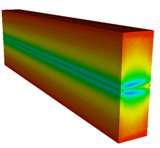
Stefano REDAELLI (CERN)04/09/2007, 14:30Accelerometer and microphone measurementsSound and vibration measurements of the LHC collimator were performed with various accelerometers and a microphone during collimator robustness tests in 2004 and 2006. The collimator jaws were hit by 450 GeV protons beam of up to 3.5x10e13, equivalent to a total energy of about 2.4 MJ (0.65% of the nominal LHC beam at 7 TeV). It was demonstrated that these measurements can be used to...Go to contribution page
-
Massimiliano AVALLE (POLITECNICO DI TORINO)04/09/2007, 15:00Experimental methods for material measurements at high strain-rateThe detailed mechanical characterization of a material is the very first step in the design of structural components. Depending on the type of application (dynamic, impact, thermal loading, fatigue...) different types of tests, experimental methods, and testing equipments are required. After a general introduction about the effects of dynamic loading on material behaviour, several...Go to contribution page
-
Nick SIMOS (BNL)04/09/2007, 15:55Irradiation damage in LHC beam collimating materialsDemand for high-performance materials that can safely intercept the LHC proton beam has prompted an extensive experimental study focusing on material degradation due to long radiation exposure. Given the multi-MW class of the beam interception process at LHC combined with the stringent positional requirements on the intercepting elements, the envelope of the current knowledge regarding...Go to contribution page
-
Alexander RYAZANOV (KURCHATOV INSTITUTE)04/09/2007, 16:25Studies of radiation effects on graphite collimator materialsThe effect of the 7 TeV proton beam irradiation on degradation of physical mechanical properties of graphite collimator materials for LHC is very important for the understanding of stability the collimators during operation of the LHC. At such high energies the carbon atoms in graphite collimator materials of LHC can get also very high energy with primary knock on carbon atoms (PKA)...Go to contribution page
Choose timezone
Your profile timezone: