Choose timezone
Your profile timezone:
7th Annual Conference of the Nordic Network for Diversity in Physics (NORNDiP)! This event brings together researchers, educators, and students from across the Nordic region to explore cutting-edge physics research. It also serves as a platform to discuss key issues related to diversity, equity, and inclusion in physics and the broader scientific community.
The conference will take place at Chalmers University of Technology, Göteborg, Sweden on November 18–19, 2025
Conference Theme: Diverse Trajectories – Challenging the Norms in Physics Research and Culture
Registration and abstract submission are closed. However, you can still register for participating in only the Keynote session “Physics that shines”.
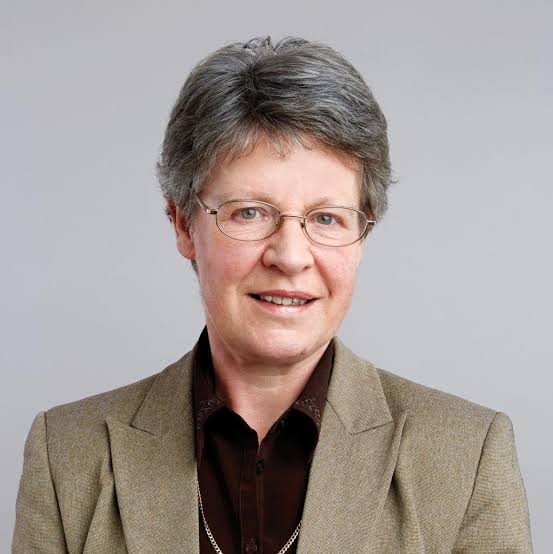
Astrophysicist and pioneering scientist, Prof. Jocelyn Bell Burnell is known for her discovery of pulsars as a graduate student – one of the most significant astrophysical findings of the 20th century. A dedicated advocate for women and underrepresented groups in science, she has received numerous awards for both her groundbreaking research and her efforts to improve diversity and inclusion in STEM.

An awarded physicist, author and advocate for diversity in STEM, Dr. Jessica Wade specializes in materials science, particularly polymer-based electronics. Beyond her research, she is internationally recognized for her advocacy work, including increasing the visibility of underrepresented scientists through outreach and Wikipedia contributions.
The event is free to attend, thanks to generous support from Chalmers’ Genie – Gender Initiative for Excellence. We welcome participants from all career stages who are passionate about diversity, inclusion, and excellence in physics.
For more information about the NORNDiP network, including previous conferences, see the NORNDiP website.
Physicists share personal paths into science, the discoveries that guide their research, and their efforts to make the field more inclusive. Through talks and discussion, speakers will reflect on curiosity, challenges, and change in physics today — and on possible directions for the future.
In this short talk, I will share my journey through astrophysics: from my early curiosity about the stars I could see on cold winter nights, to some examples of scientific insights that have shaped my career. Reflecting on the years since the first NORNDIP conference in 2018, I will consider how diversity in physics and the participation of women in STEM have evolved in Sweden and across the Nordic region. The continued vitality of the NORNDIP network, now thriving beyond its initial funding, demonstrates progress and persistence. I will discuss what I think has changed, and what still needs attention, and how we can work together over the next seven years to expand not only our scientific horizons but also the inclusiveness and sustainability of our community.
Panel: Jocelyn Bell Burnell, Jessica Wade, Finja Tieten, Maren Malling, Susanne Aalto
Moderators: Elin Ekstedt and Ulrika Sultan
Journey to the extremes of physics, where quantum theories meet the vastness of the cosmos. This session highlights how pushing the boundaries of fundamental research reshapes our understanding of the Universe.
Quantum gravitational effects remain one of the challenges in theoretical physics. One promising route to explore their potential signatures is through phenomenological models that incorporate quantum corrections into classical solutions. In my talk, I will introduce the framework of quantum space-times and noncommutative geometry as a possible mathematical language which introduces intrinsic quantum structures—such as noncommuting observables—into the geometrical language of general relativity, enabling a natural setting for the possible description of quantum gravitational effects.
In parallel, I’ll reflect briefly on my own academic path—from a series of international research fellowships, through a teaching-focused academic position, to a research & teaching faculty.
Atomic nuclei and their properties play a crucial role in many astrophysical events, such as novae, x-ray bursts or neutron-star mergers. Understanding nuclei is pivotal to address fundamental questions, such as where and how chemical elements are formed in the Universe and what is the nature of matter in the extreme conditions of compact astrophysical objects. Nuclear astrophysics connects nuclear data with astrophysical models and observations to shed light on these phenomena and questions. Spanning from femtometer-sized nuclei to astronomical scales and from accelerator laboratory experiments to space-based observations, pathways in nuclear astrophysics are fascinating but not obvious. In this contribution, I will present pathways and research in nuclear astrophysics from my point of view as an experimental nuclear physicist doing high-precision atomic mass measurements and experiments with radioactive ion beams.
In Black Hole Perturbation Theory (BHPT), confluent Heun functions emerge as solutions to the radial Teukolsky equation, which governs the dynamics of perturbations in black hole spacetimes. While these functions have traditionally been studied for their analytic properties, their connection to the underlying spacetime geometry has been less explored. In this talk, I will present a spacetime interpretation of the confluent Heun functions, showing how their distinctive behaviour near their singular points reflects the structure of key surfaces in Kerr spacetimes. Additionally, I will explore their relationship with solutions to the radial Teukolsky equation in compactified hyperboloidal coordinates.
The slowing down of energetic charged ions in matter involves two contributions: the nuclear and electronic stopping powers. Although the nuclear stopping power can now be predicted with high accuracy [1], substantial uncertainties remain in the calculation of the electronic stopping power, especially below the Bohr velocity. These uncertainties are exacerbated by trajectory-dependent effects, such as channeling, whereby ions travelling along certain crystal directions may encounter atomic and electronic densities that are significantly below the average [2]. This presents challenges in predicting the effects of ion irradiation in nuclear, space, materials science, and microelectronics industries.
In this work, we present the implementation of a trajectory-dependent model for the electronic stopping power in the efficient molecular dynamics code MDRANGE. This model is dependent on the local electron density experienced by the ion, is parameter-free, and inherently trajectory-dependent [3]. We benchmark this implementation against ion ranges and directly measured energy losses from ion transmission experiments [4]. We further discuss how this model can mitigate the uncertainties in predicting energy losses, particularly in crystal channels, and how it provides genuine predictive capability in modelling the electronic stopping power.
This work enhances the accuracy of modelling electronic energy losses in ion-material interactions and presents an opportunity to significantly improve the fidelity of ion irradiation simulations.
[1] Peltola, J., et al. Radiat. Eff. Defects Solids 161.9 (2006): 511-521.
[2] Sillanpää, J., et al. Phys. Rev. B 62.5 (2000): 3109-3116.
[3] Tamm, A., et al. Phys. Rev. Lett. 120.18 (2018): 185501.
[4] Lohmann, S., et al. Phys. Rev. A 102.6 (2020): 062803.
There has been a rapid increase in auroral tourism in the European Arctic this millennium, a component of a wider arctification of tourism in the north. The region where Northern Lights are most likely to be observed lies between 60 and 75 North. It is less likely for tourists to see the aurora in the southern hemisphere since there are fewer accessible locations with infrastructure and a climate suitable for tourism activities. Aurora tourism is a seasonal activity which takes place in the winter in areas with low light levels. A prerequisite to see an active display is that the geomagnetic field is disturbed due to solar activity. Disturbances lead to a typical series of events during an evening, discovered in the 1960s, called an auroral substorm. The substorm typically has a length of 2-3 hours during which time the most visually impressive part of the display may last just 10-30 minutes. The Sun has an approximately 11-year cycle of activity which modulates the frequency of active auroral displays. In 2025 we are experiencing a peak in the solar cycle with frequent active displays and opportunities to observe the aurora at lower latitudes than normal.
The interest in seeing the Northern Lights has created business opportunities. Entrepreneurs offer Northern Lights tours in various forms with the ultimate goal of viewing the aurora. Modern mobile phones can take high quality images and tours often offer assistance in capturing the perfect image of the aurora to take home or send to friends and family via social media. Images have been shown to be an important part of the tourist experience and to the development of a destination. An understanding of the physics behind the Northern Lights is knowledge that entrepreneurs can use to optimise the planning and implementation of their tours.
As part of the new Art & Science program at the Niels Bohr Institute, this PhD project proposes a transdisciplinary exploration of time that bridges physics with embodied artistic practice. Rather than stopping at disciplinary intersections, the work reimagines how knowledge is produced by drawing on diverse methodologies and systems of reference across disciplines.
From a physics perspective, the current research investigates statistical mechanics in the regime of small systems (N < 1000), where conventional approximations such as Stirling’s fail. The first paper introduces a correction to the digamma function from first principles that aligns more closely with physically bounded systems. It provides insights into phenomena such as critical temperatures and phase transitions at small occupation numbers, which will later inform investigations into temporality in self-gravitating systems like dark matter halos.
In parallel, the project develops performance—through dance, voice, poetry, and visual experimentation—as an epistemic practice in its own right, with a special interest in immersive experiences. These methods approach time as a multisensory and relational phenomenon, inspired by global epistemologies, opening space to embrace uncertainty, imagination, and embodied experience. Rather than treating art as illustration, the work advances a pluriversal framework in which scientific and artistic practices co-generate knowledge.
The poster will present preliminary analytical results alongside documentation of workshops and performances, as well as forthcoming multidisciplinary courses, experimental workshops, and events. By integrating rigorous physics with performative inquiry and collective agency, the project dares to confront complexity and uncertainty while imagining the possibility of the otherwise. It calls for questioning dominant constructions of time and space, and the epistemologies they rest upon. Ultimately, it invites dialogue across physics, art, and philosophy on how we research, teach, and create meaning together.
With their high melting threshold, thermal stability, and biocompatibility, silicon nanostructures serve as powerful nanoheaters, capable of boiling water and generating microbubbles under continuous-wave laser illumination. Moreover, their inherent Raman-active phonons grant a second superpower: precise Stokes thermometry, mapping temperature through shifts in phonon frequency. Combined, these abilities make silicon nanostructures both the source and the probe, simultaneously driving and revealing microboiling with high precision. Here, we use a tightly focused 488 nm laser beam, with a waist diameter of 6 µm for both optical heating and Raman thermometry to study and compare boiling around silicon nanodisks (800 nm diameter, 100 nm height) and silicon films (100 nm thickness).
In quantum transport, one investigates particle currents through quantum devices coupled to multiple reservoirs, which are defined by their chemical potentials and temperatures. Recently, there has been a large interest in studying the energy conversion processes in these devices, making the quantum thermodynamical aspects of them relevant. For example, one could imagine using dissipated heat from regular processes as a resource to cool critical components on nanochips. However, when reaching the nanoscale, particles might no longer equilibrate with their thermal surroundings. Consequently, to investigate energy conversion processes, nonthermal distributions become highly relevant descriptors of the particles' environment. I will present how a nonthermal resource can be exploited to generate power or cool another reservoir, and how to maximize the efficiency for these processes. Utilizing coherent electron scattering, the optimization is made by adjusting the transmission probabilities of electrons at different energies. Importantly, we also address the issue of how to define an efficiency as the energy current cannot be neatly divided into heat and work, due to the presence of a nonthermal resource. Based on this, we show that for either a fixed input or output current, the optimal transmission function is a series of band-passes in the energy spectrum, depending on the shape of the nonthermal distribution.
In quantum electrodynamics, local U(1) gauge invariance is implemented through the covariant derivative, which introduces a corresponding electromagnetic gauge field.
Similarly, we consider a geometric U(1) gauge symmetry in reciprocal space to derive a repulsive effective interaction for a Hamiltonian containing a term that linearly couples to the position operator.
This framework is motivated by work on inertial effects in rotating ions,
where the Hamiltonian in the rest frame of an electron bound to the ion was shown to contain terms linear in the position operator, coupling the Coriolis force due to rotation to the position of the electron [1, 2]. We demonstrate that this results in an emergent, repulsive Coulomb-like potential in reciprocal space.
In three spatial dimensions, this corresponds to an effective dipole-dipole force experienced by the electron, highlighting the geometric origin of effective forces in non-inertial quantum systems.
[1] R. Matthias Geilhufe. “Dynamic electron-phonon and spin-phonon interactions due to inertia”. In: Physical Review Research 4.1 (2022), p. L012004.
[2] Friedrich W. Hehl and Wei-Tou Ni. “Inertial effects of a Dirac particle”. In: Physical Review D 42.6 (1990), p. 2045.
Gender equality in physics is a pressing issue as women continue to be underrepresented in higher education. However, one category of higher education institutions (HEIs) – namely women’s colleges – has produced a disproportionate number of female science graduates for over a hundred years. This project uses the historical institutional records of women’s colleges and other HEIs to study the networks and mobility of female physicists at educational institutions.
We selected women’s colleges in the United States as a focus because they offer a large but well-defined dataset for analysis of female physics students and faculty. Data collection is bounded from the late 19th to mid-20th centuries to maximize the availability and quality of information. We gathered data from a variety of institutional records including course catalogs, institutional annual reports, and alumnae records. Direct and indirect sampling has yielded a still-growing database of over 500 female physicists at over 200 institutions globally active in physics prior to 1940.
Next, we are conducting network analyses on the historical data supplemented with archival research. The bipartite network analyses includes people (women in physics) and institutions (the colleges they studied and worked at) as node types. The two-mode structure of the data allows for considering both co-affiliation networks of each node type and for analysing the full bipartite graph.
Preliminary results will be presented showing the mobility of female physicists from undergraduate through graduate education. These results indicate that certain single-gender HEIs had an oversized influence in producing female physicists. Successful institutions also showed a high degree centrality indicating exchange of faculty and alumnae.
DrGENIE is a PhD student initiative in the field of gender equity, diversity, and inclusion within the academic environment, with a special focus on the PhD student community at Chalmers University of Technology.
The vision is an equitable environment for PhD students at Chalmers. Based on the core values of respect, empathy, and commitment, the initiative works towards change across all departments of Chalmers.
Each department has an elected representative, and decision-making processes within the initiative are also democratic. That allows for a very collaborative and dynamic environment, and the realization of various projects.
I'm going to present more details on the structure, financing, projects and achievements over the past five years.
Axial, or circularly polarized phonons can greatly affect the properties of a material. Thus, electron-phonon coupling between phonon angular momentum and electron orbital angular momentum leads to the splitting of electron energy levels corresponding to large effective magnetic fields [1]. Therefore, it is also interesting to investigate the effects of the coupling between phonon angular momentum and electron spin. In order to do this, we use the Hubbard model to study strongly correlated electrons systems with an additional term representing the phonon angular momentum-electron spin coupling. Specifically, we explore the influence of this coupling on conductivity and connect it to the strange metal phase.
[1] N. Shabala and R. M. Geilhufe. "Phonon inverse Faraday effect from electron-phonon coupling." PRL 133.26 (2024): 266702.
Talks and discussions exploring gender equality, representation, and diversity in physics, with a particular focus on the Nordic context.
In my talk I will present an overview of the current situation of women in physics in Finland, both in academia and industry. The number of female undergraduate students has increased during recent years, but otherwise the situation at universities has not changed much. After going through the figures from different universities, I will present my own experiences of when and why I quit academia and how it has been to work in industry. Many of my own observations can be backed up with data from different surveys, I will also present a short summary of these.
This presentation begins with an overview of the activities of KIF (Kvinder i Fysik / Women in Physics Denmark), an organization dedicated to supporting gender equality in the field. To mark the 150th anniversary of women’s admission to Danish universities, I will highlight the historical roles of women in physics in Denmark with pioneers such as Julie Marie Vinther Hansen and Inge Lehmann to name a few. I will also present the current status of women in the field, drawing on recent data from Danish universities. These developments are contextualized within the broader framework of recent Danish research on gender dynamics and the position of women in academia.
Several surveys conducted at the Department of Physics at Stockholm University have revealed that a significantly smaller proportion of women PhD students intend to remain in academia compared to the men PhD students. To follow up on this finding and investigate the underlying causes, the PhD and Postdoc Councils carried out a new survey in the spring of 2025. This survey targeted both PhD students and postdoctoral researchers, aiming to better understand their career motivations and to identify potential barriers they face within the department. The survey explored participants’ intentions to stay in or leave academia, how those intentions evolved over time, and the factors influencing their decisions. The results confirmed that women respondents were more likely than men to change their initial intention to stay in academia, instead opting to leave during the course of their PhD or postdoc. Additionally, notable gender differences emerged in the reasons given for considering a departure from academia. In this talk I will discuss the results of the survey, what conclusions can be drawn from them and which activities they have triggered so far at our department.
Political developments in the world are influencing the global physics community, with consequences for funding, research priorities, and international collaboration in Europe and the Nordic region. Presentations and discussion will offer diverse perspectives on these changes.
Speakers:
Mairi Sakellariadou (European Physics Society)
Jens Ericksson (Linköping University)
Panel Discussion: Research, Funding, and Collaboration Across Borders
Mairi Sakellariadou, Jens Eriksson and others.
From healthcare to cultural experiences, physics continues to transform everyday life. Contributions will examine applications that extend beyond the laboratory and into communities.
Cancer remains the second leading cause of death across EU countries, with ovarian cancer being one of the deadliest gynecological malignancies. Its asymptomatic onset and delayed diagnosis contribute to poor survival outcomes—only 4% at stage IV compared to 90% at stage I. Existing diagnostic tools lack the sensitivity, specificity, and scalability needed for routine early screening. There is an urgent need for minimally invasive, accurate, and cost-effective diagnostic strategies to enhance early detection and reduce cancer burden.
We present a novel, non-invasive approach leveraging volatile organic compound (VOC) profiling from blood plasma using a 32-element metal oxide semiconductor-based electronic nose, integrated with advanced machine learning algorithms. Each 1 ml plasma sample was measured over 10 minutes after standardized thawing procedures. Custom feature extraction and sensor selection enabled the training of a boosting-based ensemble model, achieving 97% sensitivity and 97% specificity in distinguishing ovarian cancer from healthy controls. A majority-vote classification framework yielded 100% patient-level diagnostic accuracy.
Beyond binary classification, the system demonstrated the capacity to identify cancer stage and distinguish between ovarian and endometrial cancer. This compact, rapid, and portable diagnostic platform offers significant potential for scalable, real-time early cancer detection and screening, especially in low-resource settings.
By integrating data-driven methodologies with gas sensor technology, this work challenges conventional approaches in cancer diagnostics—pushing the boundaries of what is feasible in the clinical setting. The results show the power of interdisciplinary applied physics in transforming biomedical diagnostics and underscore the importance of embracing diverse trajectories in both research and healthcare innovation.
From building my own microscope to constructing a synchrotron beamline, my research journey has been defined by designing tools to uncover new physics.
Over the past decade, my scientific path has been shaped by a series of deliberate leaps across diverse trajectories: instrumentation development, fundamental condensed matter physics, and atomic-scale device fabrication.
My journey began with the design and construction of a scanning tunnelling microscope (STM), fuelling my curiosity to probe atomic-scale surface phenomena. This capability opened the door to STM lithography, enabling atom-by-atom device fabrication. As part of this work, I contributed to fabricating the world’s smallest transistor—an achievement that underscored the power of precision engineering at the single-atom level.
Device fabrication naturally led me back to questions of fundamental physics. I became fascinated by the material platform enabling these devices: so-called delta-layers, ultra-sharp and ultra-dense metallic layers buried within a silicon host. My focus shifted toward investigating their electronic properties, prompting a leap from real space to reciprocal space. Angle-resolved photoemission spectroscopy (ARPES) provided a direct view of the electronic structure of these materials.
Bringing these threads together motivated the design and construction of SGM4, a microARPES beamline at the ASTRID2 synchrotron in Denmark. This beamline combines micron spatial resolution with momentum-resolved spectroscopy, bridging real-space and reciprocal-space perspectives. I am now working toward using this technique to explore nanostructured delta-layers and to perform in operando measurements of delta-layer devices.
In this talk, I will present key findings that have emerged along this trajectory. I will close with a personal reflection: how stepping beyond traditional experimental roles—building instrumentation, linking complementary techniques, and pursuing curiosity-driven detours—has shaped my identity as a researcher. I hope to encourage early-career colleagues to embrace technical skills, cross-disciplinary collaboration, and bold exploration as powerful drivers of discovery.
Plants respond to various physical stimuli, including environmental and mechanical stimuli, but their responses to an electric field are not well understood. Most studies have focused either on electrotropism, the directional growth of roots under an applied electric field, or on plant growth enhancement resulting from electric field exposure. However, the underlying mechanisms of plant responses to an electric field are still unclear. Calcium (Ca²⁺) is an important secondary messenger in plants, key mediator of long-distance signalling and has been correlated with electrical signals in plants. Therefore, correlation of electric field and Ca2+ signalling can provide insights on plant responses. Ca²⁺ signals can be monitored in vivo using GCaMPs, genetically encoded calcium indicators (GECIs), that rely on enhanced green fluorescent protein (GFP). In GCaMP-expressing plants, fluctuations in cytosolic Ca²⁺ concentrations correspond to changes in fluorescence intensity, allowing real-time visualization of Ca²⁺ signals. In this study, we investigate Ca²⁺ signalling dynamics in GCaMP3 Arabidopsis thaliana in response to electrical stimulation. Preliminary results indicate a clear Ca²⁺ response to the applied field, accompanied by clear propagation of the signal in the root. These initial findings provide new insights and a deeper understanding into the response of plants to an electric field.
Talks and discussions exploring gender equality, representation, and diversity in physics, with a particular focus on the Nordic context.
In this talk, I will review statistics collected in recent years within the STEM disciplines at the University of Iceland, particularly regarding the gender distribution at various stages of academic careers. I will also highlight several initiatives and the results of a survey recently conducted in Iceland. Finally, I will discuss the Gen-HET project and recent data collection efforts within the Gen-HET working group.
Chalmers University of Technology launched GENIE (Gender Initiative for Excellence) in 2019, a ten-year strategic initiative with a budget of SEK 300 million. Genie’s goals were and are to improve gender equality across all academic levels and foster a work environment conducive to scientific excellence. One of Genie’s foundations was that by addressing gender imbalances, removing barriers, and cultivating an inclusive academic culture, the research and education at Chalmers will become stronger and better. 6 years in, the initiative is on a new phase, working to integrate into the normal processes and routines. This talk will reflect on what has been created, what not and what are the difference from 2019.
After many years of EDI-work, it is important to stop and contemplate what does really work. At the same time, it is equally important to be patient and show reliance that change is possible.
In this contribution we discuss some answers to the question in the title and especially describe a project in Lund University to set up a network of "Critical Friends" at faculties and institutions. They will be important to evaluate and improve processes in e.g. recruitment, promotion, teaching and learning.
Over the past three years, I have served as a member of the equality committee within the DFG-funded research unit FOR5195, which focuses on relativistic jets in Active Galactic Nuclei. This interdisciplinary collaboration brings together experts in theoretical modeling, observational astronomy, and data interpretation from multiple universities and research institutes.
To promote justice, equity, diversity, and inclusion (JEDI), as well as family friendliness, the research unit established a dedicated committee tasked with developing and implementing equality measures. As part of this committee, I contributed to organizing workshops and initiatives that addressed the needs and perspectives of researchers across all career stages and scientific disciplines.
In this contribution, I will present our approach to integrating JEDI-focused workshops into the unit’s annual meetings, and highlight how collaborative efforts helped identify and implement measures to improve equality and diversity. Our experience demonstrates how structured, inclusive dialogue and sustained commitment can foster a more equitable research environment.
What draws people into physics, and what sustains their engagement? Contributions will address identity and belonging in education and research, the experiences of young women in secondary-school physics, and the role of joy and play in scientific life.
This presentation draws on findings from a longitudinal qualitative study exploring how young women navigate their identities within the context of physics, mathematics and other science subjects in Danish upper secondary education. Through student interviews, the study explores how gendered norms and expectations shape processes of recognition and participation in the physics, mathematics and broader science classrooms. The analysis highlights the tensions young women experience when attempting to align teacher-valued attributes, such as confidence, assertiveness, and visible engagement, with their gendered identities. The talk presents how young women navigate and negotiate their identities in contexts where confidence and assertiveness are rewarded, and invites reflection on how gendered norms and expectations influence students’ opportunities to engage and succeed in physics, mathematics and broader science education.
Understanding student experiences in physics is essential to promote equal access to physics education and careers. Often associated with masculinity, intelligence, and nerdiness, physics faces inequitable participation based on gender, ethnicity, and social background. Identity-related studies have proven helpful in understanding why some students struggle to fit in. However, quantitative studies rarely investigate what physics students do, how they act, that tells others that they have physics identities. This study contributes by using questionnaire data from 430 first-year physics students at six Scandinavian universities to compare how physics students see a student who “fits in” and how they see themselves. Implications for physics education are discussed.
We will share experiences, question expectations, and explore how we can build an inclusive future in physics